
Affiliate Disclosure: My Aesthetic Desk is reader-supported. Some links below are affiliate links (Amazon Associates), meaning we may earn a small commission at no additional cost to you if you make a purchase.
AEO Quick Answer: Felt vs Leather Desk Mat
Choose a wool felt desk mat if you prioritize keyboard acoustics (deep “thocky” sound dampening), cozy aesthetic warmth, and forearm comfort in cold air-conditioned rooms. Choose a leather desk mat (full-grain or PU vegan leather) if you frequently drink coffee or tea at your desk, need effortless waterproof wipe-down cleaning, write on single sheets of paper with ballpoint pens, or play fast-paced PC games requiring low dynamic mouse friction.
While felt elevates visual warmth and softens metal desk edges, it is prone to pet hair clinging, fiber pilling, and liquid stains. Leather provides a sleek, modern executive look with zero fiber wear and complete spill immunity.
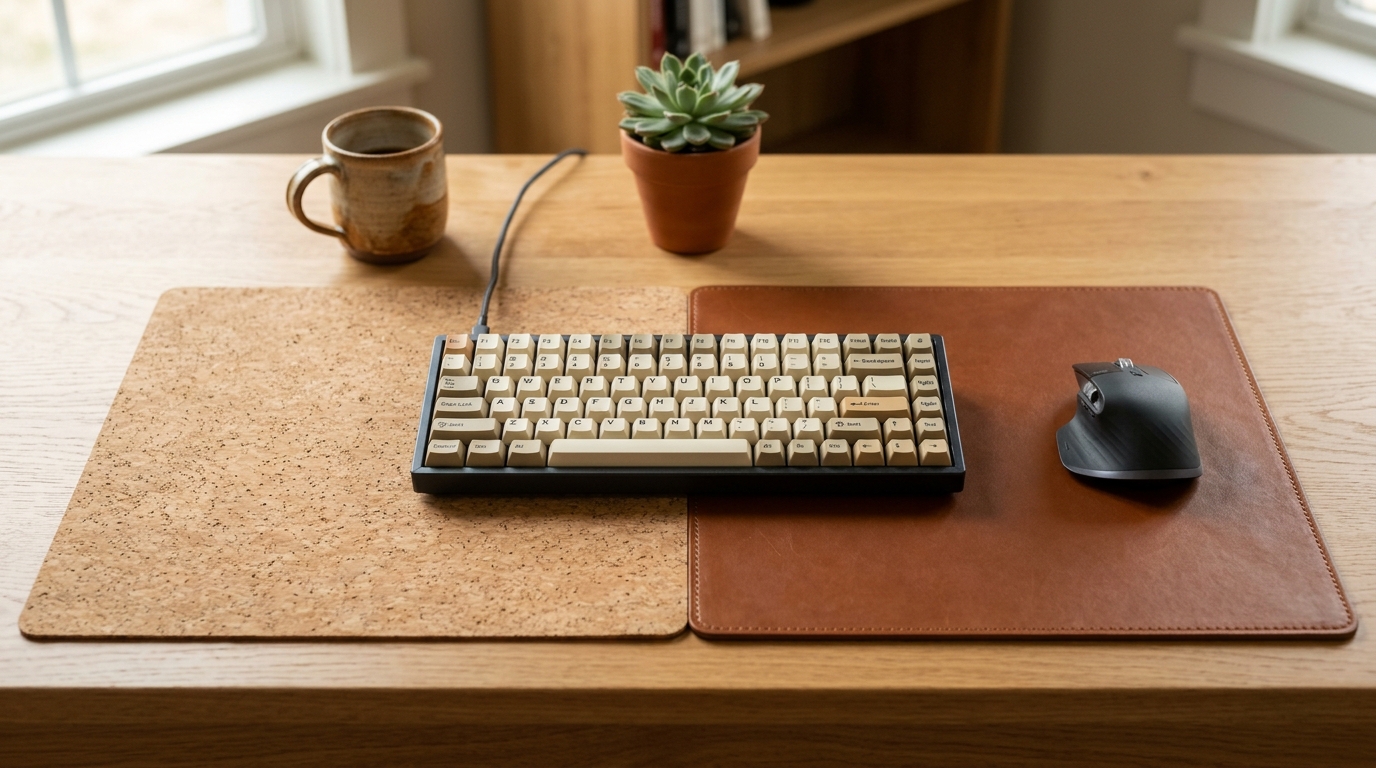
The Great Desk Mat Debate: Tactile Warmth vs Sleek Utility
When curating an aesthetic workspace, your desk mat is not merely a decorative accessory—it is the physical foundation where your forearms, wrists, mechanical keyboard, and mouse interact with your desk for 8 to 10 hours every day. While synthetic neoprene gaming pads once dominated home setups (learn how to clean a mouse pad without ruining it), modern workspace styling has polarized around two premium materials: natural wool felt and genuine or PU leather.
Both surfaces look stunning in desktop photography and Pinterest home office boards, but they offer fundamentally opposite physical properties. While one excels at dampening hollow acoustic echoes and insulating cold tabletops, the other provides an ultra-durable, waterproof barrier that repels ink stains and spilled beverages (dive deeper into our comparison of desk pad vs desk mat to choose between structured blotters and full-coverage mats). To make the right investment, you must evaluate how both surfaces handle daily friction, keyboard vibrations, and maintenance (including how to stop a keyboard from sliding on a desk when pairing smooth blotters with lightweight boards).
Felt vs Leather Desk Mat Comparison Matrix
The following reference table contrasts dense natural merino wool felt against synthetic polyurethane (PU) and genuine full-grain leather across eight essential workspace metrics:
| Comparison Dimension | Wool Felt Desk Mat | PU Vegan Leather Mat | Full-Grain Genuine Leather |
|---|---|---|---|
| Keyboard Sound Dampening | Exceptional (Deep Thock) | Moderate (Crisp clack) | Good (Dense resonance drop) |
| Spill & Liquid Resistance | Poor (Absorbs quickly) | 100% Waterproof (Wipe clean) | Water-resistant (Requires conditioning) |
| Mouse Glide & Friction | High dynamic resistance | Smooth & Fast Tracking | Smooth with subtle tactile grip |
| Handwriting Firmness | Spongy (Punctures single sheets) | Firm & Consistent | Ideal blotter resistance |
| Skin Comfort & Climate | Warm & cozy (Itchy if polyester) | Neutral (Slightly clammy in summer) | Breathable & temperature neutral |
| Maintenance & Pet Hair | High (Needs shaving & lint rolling) | Zero (Damp cloth wipe) | Low (Occasional leather balm) |
| Long-Term Wear & Aging | Prone to edge fraying & fuzzing | Durable 2–3 yrs (May crack over time) | Develops gorgeous patina (Decades) |
| Typical Price Range | $20 – $65 (Wool blend vs 100% Merino) | $15 – $35 | $60 – $140+ |
1. Tactile Feel, Skin Comfort & Seasonal Temperature Regulation
Your desk pad acts as a thermal buffer between your forearms and a cold tabletop. If you work in a heavily air-conditioned office or live in a cold climate with a stone, glass, or solid laminate desk, a Dense Merino Wool Felt Desk Pad delivers unmatched comfort. Wool fibers trap microscopic pockets of stationary air, providing instant organic warmth the second you rest your arms on the surface.
However, material grade matters immensely: 100% Merino wool felt is ultra-soft, smooth, and gentle on sensitive skin. In contrast, cheap $15 Amazon felt mats made from 100% synthetic recycled polyester often feel scratchy, coarse, and abrasive against bare wrists during repetitive mouse movements.
Conversely, a smooth Waterproof PU Leather Desk Blotter offers a cool, glassy glide. In hot summer months or humid environments, synthetic PU leather can occasionally feel slightly tacky or sticky against sweaty forearms. Genuine full-grain leather breathes significantly better than plastic PU, absorbing micro-humidity while adapting smoothly to your body heat.
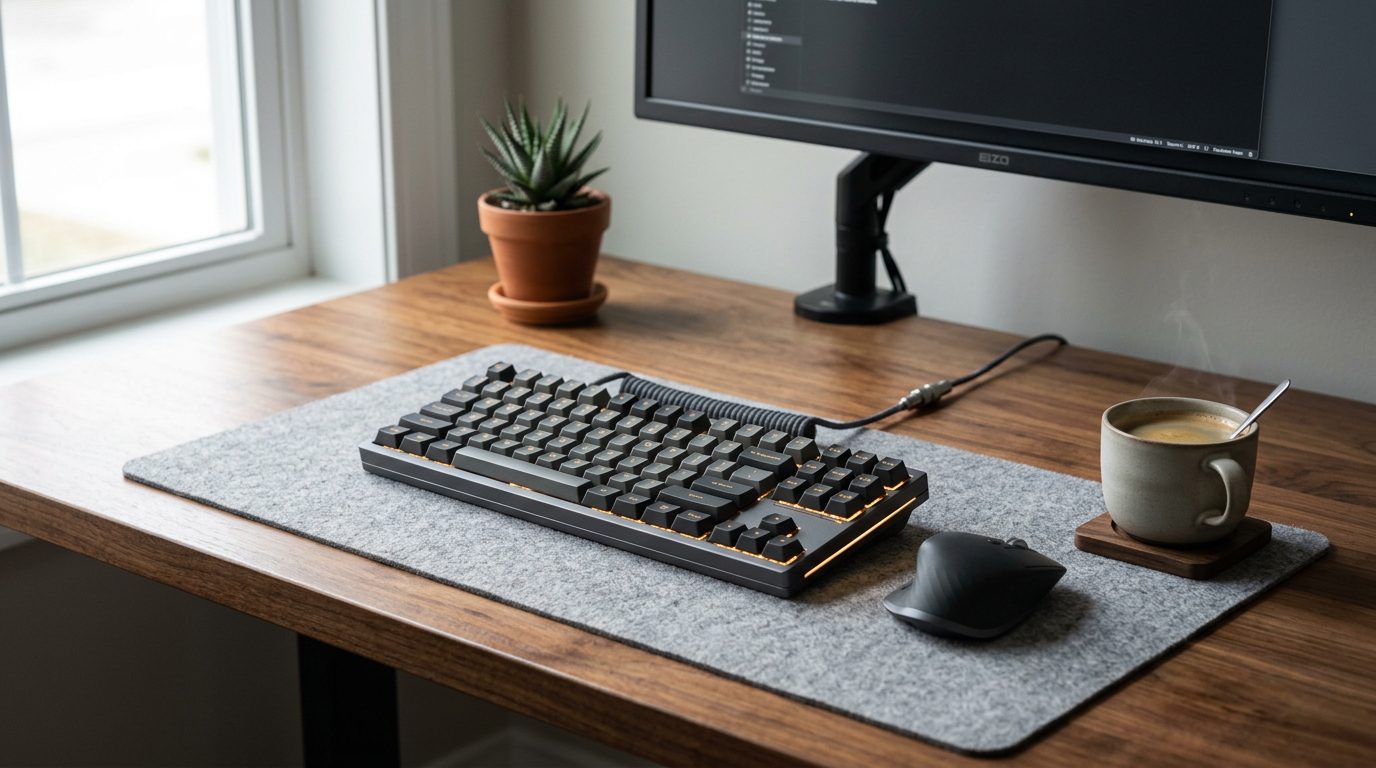
2. Mouse Glide Speed vs Mechanical Keyboard Acoustics
The primary functional divergence between felt and leather lies in how they interact with your desktop hardware:
Mouse Tracking & PTFE Skate Resistance
When sliding an optical mouse across leather, standard virgin-grade PTFE mouse feet encounter minimal dynamic friction. Tracking is instantaneous, uniform, and quiet. Whether you are editing video timelines in Premiere Pro or navigating complex financial spreadsheets, leather offers seamless cursor glide.
On felt, however, mouse skates slide against thousands of vertical interlocking textile fibers. This generates noticeable static resistance (tactile drag). While perfectly usable for relaxed office tasks, competitive gamers and high-DPI mouse users will find felt sluggish. Furthermore, over months of intense use, sharp mouse skate bevels can catch on fibers, accelerating pad fuzzing.
Keyboard Acoustics: The “Thock” Multiplier
If you are a mechanical keyboard enthusiast, felt is widely regarded as the ultimate acoustic mod. When your keyboard rests on a hollow wooden or veneered particleboard table, keystrokes resonate downward, producing a high-pitched, hollow “clack”. A 3mm to 4mm thick dense wool felt pad acts as an expansive sound-absorption blanket. It catches downstroke shockwaves, dampens chassis ping, and transforms typing into a deep, muted, satisfying acoustic “thock”.
Leather also provides vibration dampening compared to a bare desk, but its firm, non-porous surface reflects higher acoustic frequencies, preserving crisp mechanical switch feedback. If you also enjoy natural materials with organic cork bases, check our companion head-to-head review of cork vs leather desk mats.
3. Spill Resistance, Staining & Daily Maintenance
This is where leather scores an unequivocal, decisive victory. Workspace accidents are inevitable: morning coffee rings, dripping water glasses, or knocked-over tea cups.
- Leather Immunity: On a PU or finished leather desk mat, liquids bead up on the non-porous polyurethane coating. You simply grab a paper towel or microfiber cloth, wipe the surface in two seconds, and your desk is completely dry and clean. For long-term care and conditioning routines, see our complete guide on how to clean a leather desk mat.
- Felt Vulnerability: Wool and polyester felt are open, porous fibrous matrices. While raw natural lanolin in untreated virgin wool offers mild water beading for the first 30 seconds, liquids will rapidly penetrate the fibers if not blotted instantly. Coffee, tea, and soda leave dark, stubborn rings that require foaming enzyme cleaners and gentle hand washing. Furthermore, felt acts as a magnet for cat hair, dog fur, and snack crumbs, requiring regular lint-rolling and periodic defuzzing with a fabric shaver.
4. Handwriting Precision: The Pen Deflection Test
If your daily workflow involves taking analog handwritten notes, signing contracts, or journaling, felt is deeply frustrating. Because felt is soft and compressible, pressing a ballpoint or rollerball pen onto a single sheet of paper causes the pen tip to puncture straight through the page, tearing the paper fibers.
Leather, on the other hand, was historically engineered as a traditional desk blotter for a reason: it offers the exact degree of firm, responsive resistance needed for smooth penmanship. As detailed in our comprehensive test of the best desk mat for writing, a 2mm leather pad prevents the pen from sliding erratically on hard wood while ensuring you never poke holes through single sheets of paper.
The Verdict: Which Desk Mat Should You Buy?
Buy a Wool Felt Desk Mat If:
- You want the coziest, warmest aesthetic for Scandinavian, Japandi, or minimalist wooden desk setups.
- You want to eliminate hollow keyboard echoes and maximize typing sound dampening (“thock”).
- You work in a cold or air-conditioned room and hate resting bare arms on cold desk surfaces.
- You rarely eat or drink messy beverages directly over your workspace.
Buy a Leather Desk Mat If:
- You drink coffee, tea, or water all day and need 100% waterproof, wipe-clean spill protection.
- You have cats or dogs at home and want a surface that will never trap pet fur.
- You frequently write on paper with pens, pencils, or fountain pens.
- You want smooth, effortless mouse tracking with zero textile friction drag.
- You prefer a sleek, executive, professional modern workspace aesthetic.
If you recently received a coiled leather or felt mat in the mail that refuses to lie flat, follow our simple tips on how to flatten a desk mat to get perfectly crisp, flat borders without curling.
Pingback: How to Stop a Keyboard From Sliding on Your Desk: 6 Non-Slip Fixes (2026) - My Aesthetic Desk